
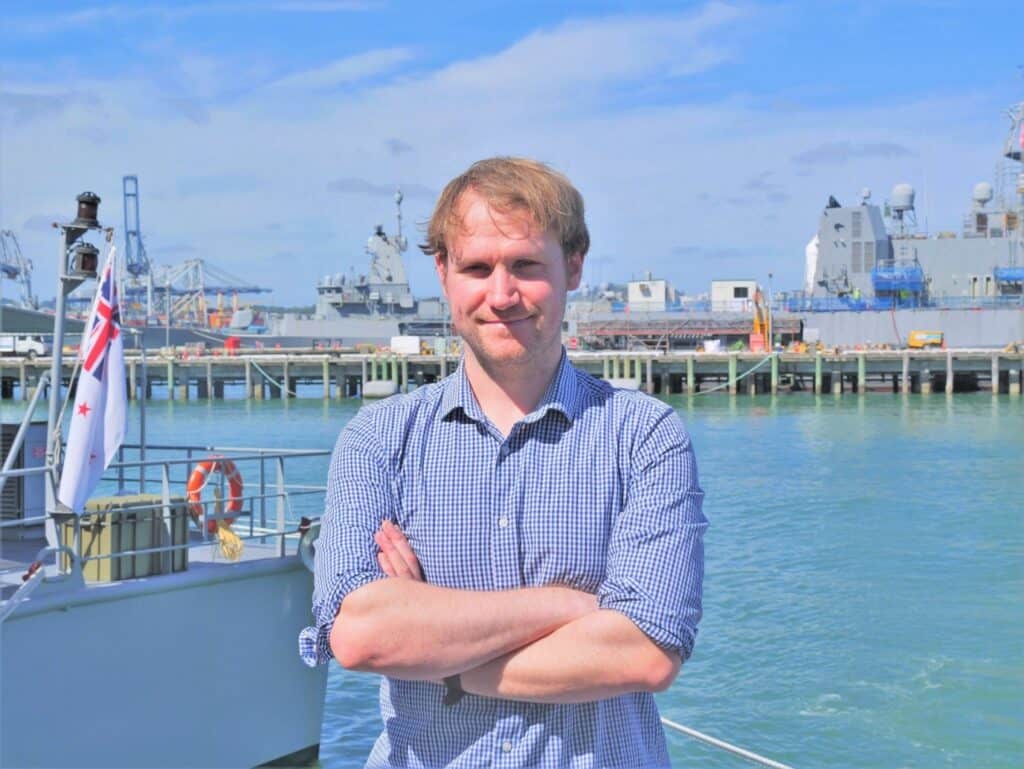
James joined Babcock in 2013 as a member of Babcock’s Graduate Program in the UK. He had an interest in ships and being out on the water from childhood. Ferry trips to France and Spain and visiting museum ships such as SS Great Britain and HMS Belfast convinced James to follow this career path.
Based at the Devonport Naval Base in New Zealand, James is now a Senior Naval Architect.
We sat down with James to find out about his career path with Babcock.
Tell us about your career with Babcock
After completing my four-year master’s degree in Naval Architecture, I joined Babcock in 2013 as a Graduate at the Rosyth Dockyard. I was based there for 9 years before moving to Marine Industrial Design (MID) in New Zealand, where I have been since.
During my time with Babcock, I have worked at a number of different sites and on a wide range of projects from offshore support vessels through to naval concept designs. It has been really beneficial to gain experience across different sites, to see how different teams work and to broaden my contacts within the industry.
When my wife and I looked into making the move to New Zealand, I knew there was a Babcock site in country, so I put in my application to work for MID, as I wanted to continue working for Babcock. When I got the job at MID, my wife and I were supported throughout the process of moving countries, which at the time was not particularly easy as New Zealand had not long re-opened its borders post covid and I was one of the first to make the move through a new visa system.
However, I would definitely recommend others from the UK to make the same move!
Why did you choose to join Babcock?
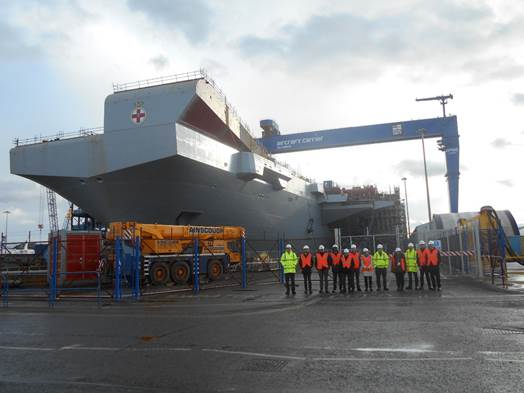
I initially joined Babcock in the UK for many reasons, but I would say the main reasons were the opportunities to move between the different sites and sectors (particularly as a graduate), and the opportunity to work for a company that was doing major projects that supported the UK and its armed forces. The carrier programme, in particular, was a huge appeal as it was one of those projects you would likely only see once in your lifetime.
What does your role as a Naval Architect entail?
MID provides support to the Maritime Fleet Sustainment Services (MFSS) contract through a wide range of activities, as well as providing engineering resources to other Babcock teams across the Devonport site. Work can range from supporting Engineering Change Proposals (ECPs) to endorsement or recommendation of corrosion repairs to supporting the navy and Babcock production teams if they have issues or design queries. Our main role is to manage the stability of vessels through to their end of life, and to manage weight margins and a vessels centre of gravity.
My role is to be the primary point of contact for Royal New Zealand Navy related tasks and to assign resources as required.
What are the most enjoyable and/or interesting aspects of your job?
The most enjoyable part of my job is to be able to go out into the yard and to go onto the ships. With the base hosting the New Zealand fleet along with commercial ships and naval ships of other countries, there are plenty of opportunities to get out and take a look.
At MID we don’t just do naval work; we also get a lot of commercial work which covers a broad range of vessel types and sizes. No two jobs are the same, which gives you a lot of variety in your day-to-day tasks. With Babcock having offices across New Zealand and Australia, you get opportunities to do work in other parts of the country, or even internationally, which is good for developing skills and for exploring new cultures and seeing how other yards/companies operate.
What is your proudest moment since joining Babcock?
It’s hard to identify a single proudest moment in my career; there have been numerous projects I have worked on, each of which have been rewarding in their own different ways.
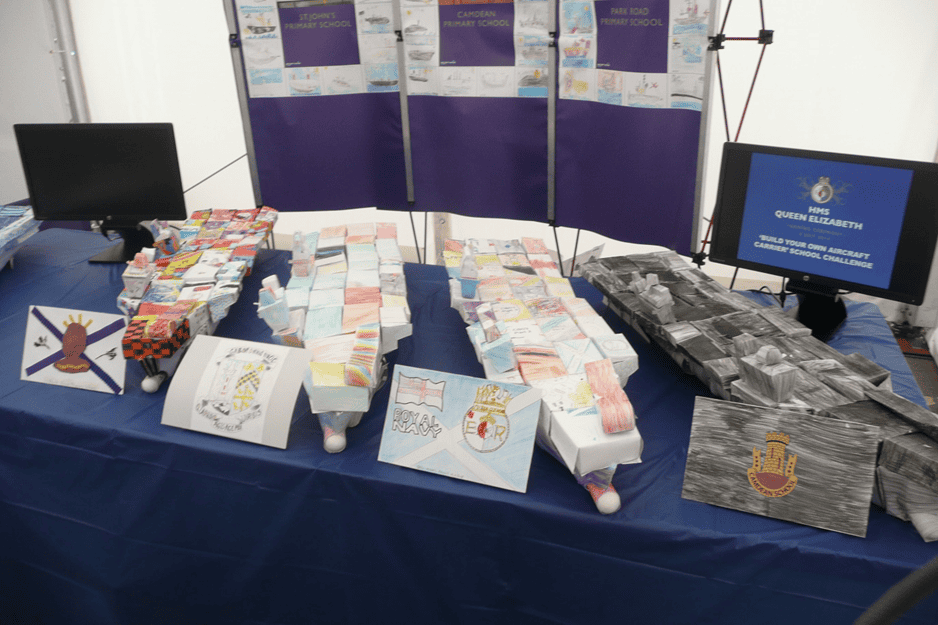
Whilst in the Graduate Program, another graduate and I developed a STEM activity to celebrate the launch of the first Queen Elizabeth Class Carrier, which we ran at a number of schools across Fife. This activity was picked up and distributed to other Babcock/BAE yards across the country that supported the QEC project and ended up being presented to several thousand children across the country.
One of my proudest project-based moments occurred just before the move from the UK to NZ – I was able to see the construction of the first modules of HMS Venturer. This was a proud moment as I had been in the structures team throughout the functional and detailed phases and had contributed to parts of the ships structural design. Seeing the real-life version of sections I had designed was a real career highlight.
What makes Babcock a good place to work?
There are a number of reasons that Babcock is a good place to work, but for me I’d say the following are all contributing factors:
- Knowing that what I do is meaningful and is directly supporting the New Zealand Navy and our other clients.
- There are plenty of opportunities across the company to try new things and work in different areas – there is room to grow my career and opportunities on hand to develop my skills.
- Working for a company that is always looking to improve and embrace new technologies.
- Work-life balance of agile and flexible working, making home life easier.
- With Babcock, our health and welfare are a key priority, particularly through the use of the wellbeing days and additional support if needed.
Learn more about a career with Babcock
At Babcock, you’ll be part of something bigger with opportunity across Babcock’s global reach of diverse and innovative programs. With an engineering career at Babcock, you have the opportunity to work across a diverse range of programs and projects:
- Design, modify and maintain naval ships
- Design, build and maintain ship and submarine systems
- Develop advanced communication and surveillance systems
- Modify and maintain aircraft
- Develop and maintain systems for future soldiers.
Read more on our Engineering Careers page.
Our Early Careers Program provides a range of pathways to help launch your career, gain first-hand experience and develop the knowledge and skills that can open up a world of opportunities. Read more on our Early Careers page or visit us at an upcoming careers event.