
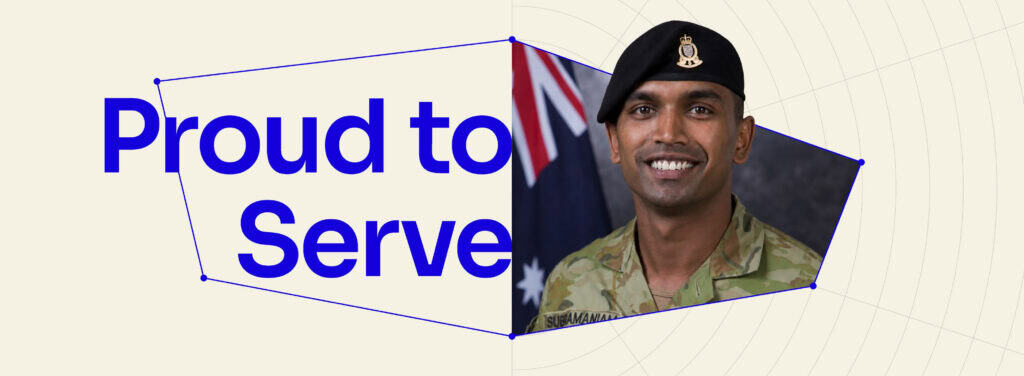
Veteran and Principal Engineering Technician, Somas Subramaniam, finds it rewarding to engage with stakeholders and see the capabilities we support in action. Somas continues to serve in the Army Reserve, supported by Babcock and his team.
Somas served in the Australian Army for more than twelve years; after graduating from the Royal Military College – Duntroon, he was commissioned into the Royal Australian Army Ordnance Corps and went on to hold a variety of regimental and training appointments across several units. His career roles included Assistant National Fleet Manager for Chemical, Biological, Radiological, Nuclear and Explosives (CBRNE) equipment within Land Systems Division Capability Acquisition and Sustainment Group (CASG).
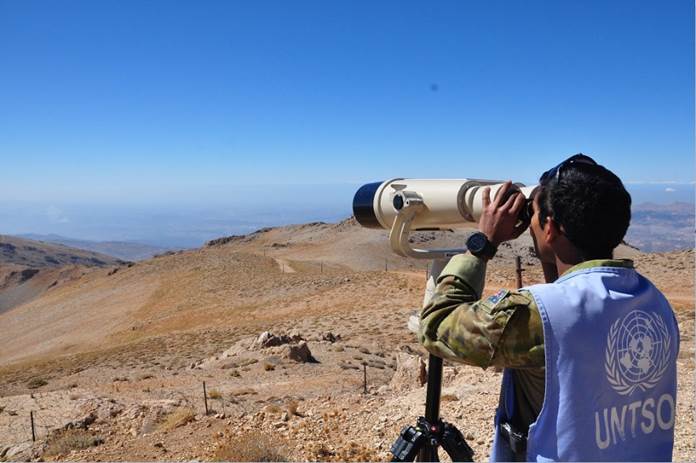
“A defining period of my service was my deployment to the Middle East from 2024 to 2025. I initially served as a United Nations Military Observer before moving into the role of Chief Operations Officer for Observer Group Golan. This was during a particularly significant and complex period in Syria and the experience remains one of the most meaningful of my career.”
Somas transitioned to the Army Reserve and earlier this year joined Babcock as a Principal Engineering Technician in our Counter-CBRNE team.
We caught up with Somas to chat about his career at Babcock and his experience transitioning from Defence to civilian employment.
Tell us a bit about what your role as Principal Engineering Technician involves.
I primarily support the introduction of the new Explosive Ordnance Disposal (EOD) robots being delivered to the Australian Defence Force (ADF).
A large part of my role involves working closely with stakeholders – often my previous units and long-standing networks – to ensure the delivery, integration and long-term sustainment of these capabilities.
What is your favourite part of your current role?
The C-CBRNE team has been incredibly welcoming and always willing to help me learn new processes and perspectives.
I genuinely enjoy the stakeholder engagement opportunities. Being able to attend EOD training and see firsthand the impact of our team’s work has been a highlight. It’s rewarding to see the capability we support in action.
I’ve also taken a strong interest in the broader changes occurring across Defence, particularly the transition from CASG to Defence Delivery Agency (DDA). Having come from the “green machine,” I’m keen to help translate legacy understandings into what these new structures mean for Babcock and how we operate.
Why did you choose Babcock?
I’d worked with most of the Babcock C-CBRNE team during my Army career, so when the opportunity came up to join the team, the decision was easy.
Even though the team operates across a dislocated footprint, the ability to work from central hubs and the strong support network has made the transition smoother for me and my family.
How has Babcock supported your development?
Even before my first day, the support I received ensured I was prepared and confident walking in. Since then, I’ve been given clear guidance on progression pathways, along with access to courses and training that have made the transition from Defence to industry seamless.
What have you found to be transferrable skills from your service to your current role?
My time in Defence taught me how to operate in complex environments, communicate clearly across diverse stakeholders and maintain capability readiness. All these skills translate directly into my role today. The ability to adapt quickly, build rapport and understand the operational context behind technical decisions has been invaluable.
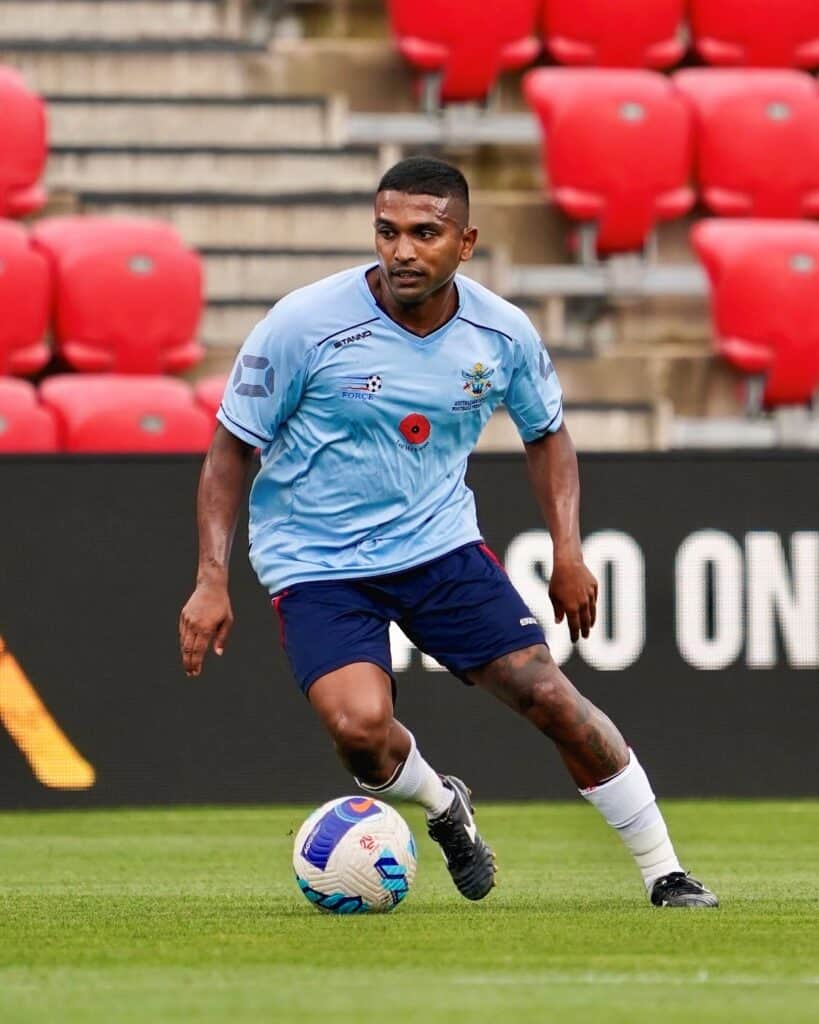
We hear you played representative football – tell us about that.
Alongside my professional ADF roles, one of the great joys of my service has been representing both the Army and the ADF in football.
I was fortunate to be selected for several years, including tours to South-East Asia and participating in the annual Remembrance Day match against the Adelaide United Legends.
These opportunities were a privilege and remain some of my most memorable experiences, bringing together service, sport and community in a meaningful way.
What aspects of your transition from Defence to civilian employment were easier than expected, and what challenges did you encounter?
For the vets out there, everyone talks about the “soft landing,” especially when Defence has been your whole world. I was fortunate to join a team I already knew and respected and that made things far easier. With the majority of the C‑CBRNE team being veterans, that sense of familiarity took away a lot of the uncertainty that usually comes with leaving the uniform behind.
The only real challenge (minor in the scheme of things) is adjusting to a different tempo. Defence runs on its own rhythm and industry runs on another. Learning how decisions move, how projects evolve and how responsibilities are shared took some getting used to, but the support around me made that adjustment easier.
Do you have any tips for current serving members or veterans who are thinking about a career change?
Keep in touch with your networks, they’ll help you more than you realise. Stay open to picking up new things, even if you’ve been around the block a few times. Finally, don’t underestimate what your Defence background gives you. Those skills transfer better than you think.
Learn more about a career with Babcock
At Babcock, you’ll be part of something bigger with opportunity across Babcock’s global reach of diverse and innovative programs.
Read more on our Careers page.