

Veteran and Repairable Items Manager, Shania Neaves, is passionate about supporting mental health and as a member of our Mental Health Peer Support Program, she’s committed to helping make a difference in the lives of those around her.
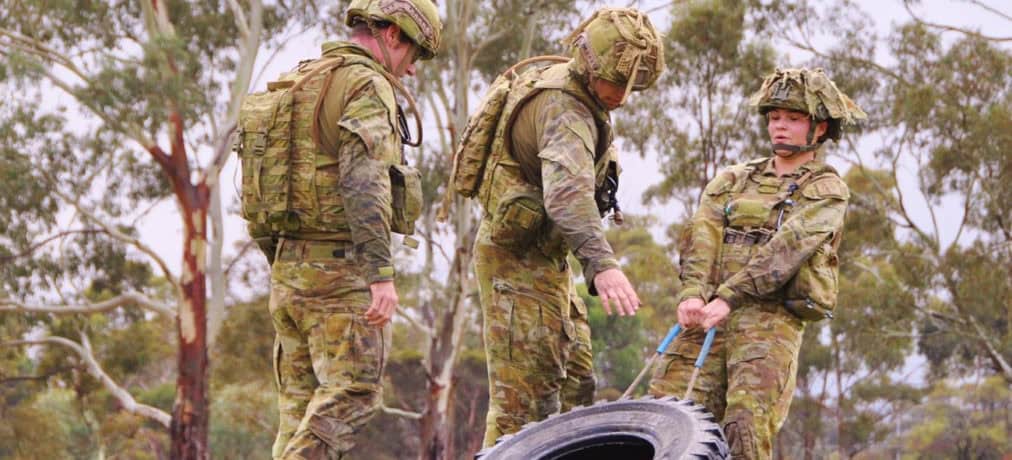
Shania joined Babcock in 2018 following her service in the Australian Army as a Unit Quartermaster Storeman, continuing her family’s link with service.
“Many of my family members have served in the Australian Army, including my brother, cousins, and my Grandad who served for more than 20 years.”
We caught up with Shania to chat about her career at Babcock and her experience transitioning from Defence to civilian employment.
Tell us a bit about what your role as Repairable Items Manager involves.
My role as Repairable Items Manager involves managing the repair and servicing of assets to ensure they are returned to service on time and remain operationally ready to support both the RAAF and Navy. I work closely with suppliers, maintenance providers and internal stakeholders to coordinate repairs, monitor asset performance, manage priorities and resolve issues that may affect fleet availability.
In addition, I ensure technical documentation remains current and compliant, supporting the ongoing safety and reliability of the ADF Ground Support Equipment (GSE) fleet. I also manage the disposal of assets at end of life, ensuring all requirements are met and adhered to throughout the process.
What is your favourite part of your current role?
My favourite part of the role is the variety. No two days are the same, and there is always a new challenge that arises.
I enjoy working with all the different teams and stakeholders to find practical solutions and seeing the direct impact of our work on fleet availability and capability. It’s rewarding knowing that the work we do helps support those who rely on these assets.
Why did you choose Babcock?
I chose Babcock because of their strong reputation in the Defence industry and their commitment to supporting Defence capability.
As someone transitioning from military service, I was looking for an organisation where I could continue contributing to a meaningful purpose while also developing my career. The personnel who hired me were also ex-Defence, therefore putting me at ease with the transition. Babcock offered opportunities for growth, a supportive team environment and values that aligned closely with my own.
How has Babcock supported your development?
While much of my development has come through the experience gained in my role, Babcock has provided an environment where I’ve been trusted to take on a broad range of responsibilities and learn through practical experience. Managing assets across their entire lifecycle, working with stakeholders across Defence and industry, and navigating complex compliance requirements has significantly expanded my knowledge and skills.
The variety of challenges within the role has helped me build confidence, strengthen my problem-solving abilities and develop a deeper understanding of Defence sustainment and capability management. I’ve also benefited from working alongside experienced colleagues whose knowledge and support have contributed immensely to my professional growth.
You have undertaken training in Babcock’s Mental Health Peer Support Program – what influenced you to get involved?
Mental health is something I have always been passionate about. My interest in this area began when I was in high school, where I experienced the impact of suicide and mental health struggles affecting people close to me. Those past experiences highlighted how important it is to have support networks and people who are willing to listen without judgment.
Since then, I’ve developed a strong appreciation for the importance of mental wellbeing, both in our personal lives and in the workplace. I recognise that everyone faces challenges at different times, whether they’re related to work, family, or other life circumstances.
I wanted to undertake the Mental Health Peer Support Program to develop my skills and confidence to better support my colleagues. The program provided valuable tools for active listening, having supportive conversations and helping connect people with appropriate resources when needed.
For me, it’s about contributing to a workplace culture where people feel comfortable reaching out for support and know they don’t have to face challenges alone.
What have you found to be transferrable skills from your service to your current role?
My military service provided many skills that I use every day in my current role. These include problem-solving, adaptability, time management and the ability to perform under pressure. Strong communication, teamwork and attention to detail have also been invaluable.
In the Army, there was no room for error. Every action had a consequence; therefore, the environment teaches you to remain focused on achieving outcomes while working collaboratively, which translates extremely well into sustainment and asset management roles.
What aspects of your transition from Defence to civilian employment were easier than expected, and what challenges did you encounter?
The easier aspect of transitioning from Defence to civilian work was adapting to the professional environment. Many of the skills, values and work ethic developed through Defence service transferred directly into my civilian role.
The biggest challenge was learning a new organisational structure and becoming familiar with different processes, terminology and ways of working. Like many others, there was also an adjustment in moving from a highly structured, fast paced environment to one that requires a slower approach. Having supportive colleagues and leaders made that transition easier to tackle and has since allowed me to become a professional, supportive leader myself.
Do you have any tips for current serving members or veterans who are thinking about a career change?
My biggest piece of advice is to recognise that the skills you’ve developed through Defence are often more transferable than you realise. Leadership, teamwork, accountability, resilience and the ability to perform under pressure are highly valued across many industries.
Transitioning out of Defence can feel like stepping into the unknown, but you don’t need to have your entire career mapped out from day one.
If you are open to learning, back yourself and look for opportunities where your experience is recognised, you can take on almost any new challenge head on. You should trust that the confidence and capability you’ve built throughout your service will continue to serve you well in the next chapter of your career.
Learn more about a career with Babcock
At Babcock, you’ll be part of something bigger with opportunities across Babcock’s global reach of diverse and innovative programs.
Read more on our Careers page.
If you or anyone you know needs help:
- Lifeline on 13 11 14
- Kids Helpline on 1800 551 800
- MensLine Australia on 1300 789 978
- Beyond Blue on 1300 22 46 36
- Headspace on 1800 650 890